Regional Compliance Tweaks Reshaping Transaction Flows in Blended Virtual-Physical Card Environments
Written by Harper Otto · Nov 21, 2026

Regional Compliance Tweaks Reshaping Transaction Flows in Blended Virtual-Physical Card Environments
Regulatory adjustments across multiple jurisdictions have started to alter the pathways that transactions take when virtual cards interact with physical ones in unified systems. These changes reflect efforts by authorities to address security, data handling, and cross-border movement of funds while maintaining operational efficiency for issuers and users alike. In blended environments, a single account often supports both digital tokens and tangible cards, which means compliance updates in one region can redirect authorization sequences, settlement timelines, and reporting requirements that span both formats.
Core Mechanics of Blended Card Systems
Blended setups allow the same underlying account to generate virtual card details for online use while also supporting a physical card for in-person purchases. Transaction flows in these systems rely on shared infrastructure for authentication, risk scoring, and real-time balance updates. When regional rules modify encryption standards, data localization mandates, or identity verification steps, the sequence of checks during authorization shifts accordingly. Observers note that issuers must reroute certain data packets through new intermediaries or apply additional screening layers before a transaction can proceed to clearing.
Recent Adjustments in Key Regions
European authorities implemented refinements to digital payment directives in the second half of 2026, requiring enhanced tokenization protocols for virtual credentials that link to physical cards. These rules have prompted issuers to segment authorization requests based on whether the initiating device originates inside or outside the bloc. Data from the European Central Bank shows measurable increases in processing latency for cross-format transactions during the initial rollout phase. Meanwhile, several U.S. states introduced updated consumer data protection statutes effective November 2026, which mandate separate consent flows for virtual card provisioning compared with physical card issuance. Issuers operating nationwide networks have adjusted their routing logic to apply state-specific filters before funds move between the virtual and physical layers.
Effects on Authorization and Settlement Sequences
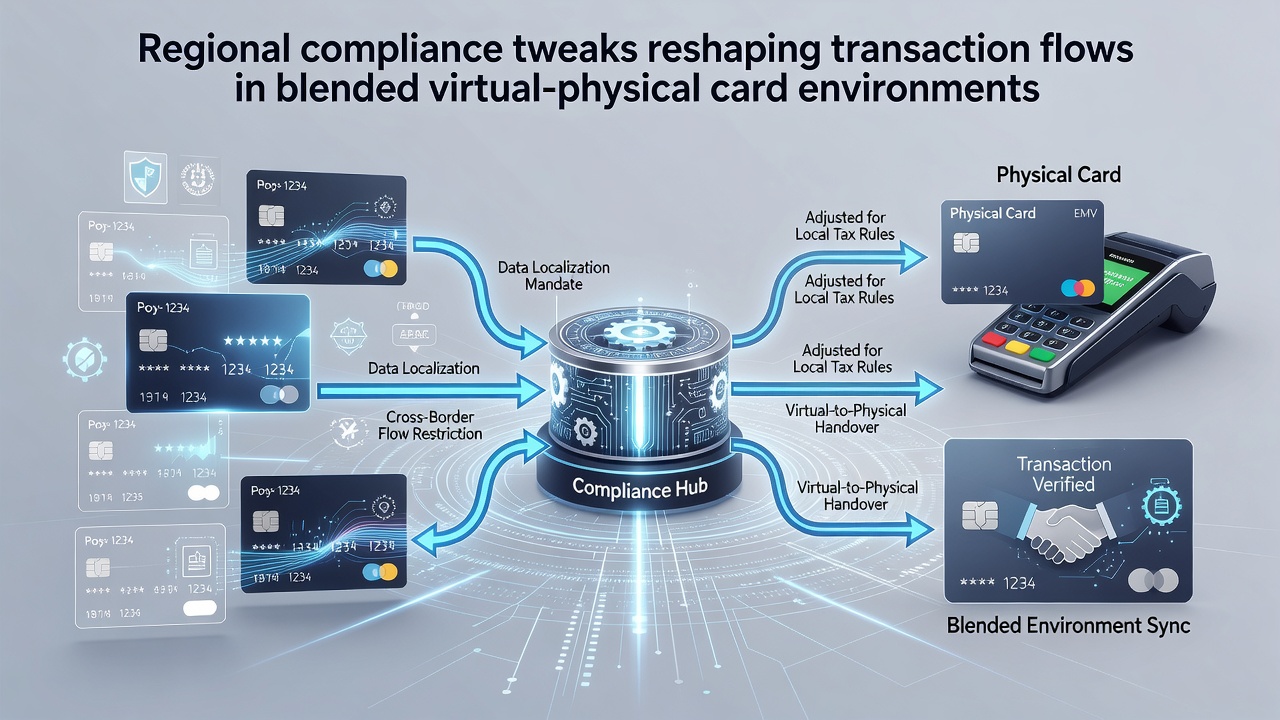
Compliance tweaks frequently insert additional validation nodes into the transaction path. A virtual card request that previously moved directly to an acquirer may now pass through a regional compliance gateway first, where checks for sanctioned entities or mismatched device locations occur. Physical card transactions that draw from the same account balance must then reference the updated virtual-side records to avoid double-spending flags. Research from the Bank for International Settlements indicates that such layered routing has extended average settlement times by fractions of a second in high-volume corridors, though overall throughput volumes have remained stable. Issuers respond by deploying dynamic routing engines that select the shortest compliant path based on transaction geography and card format.
Reporting and Audit Trail Modifications
Regional rules have also expanded the granularity of transaction records that must travel alongside each authorization message. Virtual card activity now often carries additional metadata tags that identify the provisioning channel and any linked physical card usage patterns. These tags travel through the same rails as traditional card-present data, requiring updates to both issuer and acquirer record-keeping systems. Analysts tracking industry reports note that audit processes have lengthened because examiners request unified ledgers covering both formats rather than separate streams. Institutions that maintain centralized compliance databases have adapted by building unified query interfaces that surface activity across virtual and physical instances without duplicating storage.
Cross-Border Considerations
Transactions that cross regional boundaries encounter cumulative compliance layers. A virtual card issued under one set of rules may trigger secondary checks when used to fund a physical card transaction in another jurisdiction. Payment networks have published updated schema specifications that accommodate these stacked requirements while preserving message compatibility. Those who manage high-volume international portfolios report that pre-authorization screening now occurs at multiple points, each governed by the strictest applicable regional standard. This approach prevents downstream rejections yet adds predictable overhead to every blended transaction.
Technology Adaptations by Issuers
Issuers have accelerated deployment of configurable compliance engines that interpret regional rule sets at runtime. These engines evaluate card format, transaction geography, and account history before selecting the appropriate sequence of checks. Integration with existing core banking platforms occurs through standardized APIs that allow rapid insertion of new validation steps without full system replacements. Several large processors completed phased rollouts of such engines ahead of the November 2026 deadlines in multiple U.S. states, enabling smoother transitions for blended card portfolios.
Conclusion
Regional compliance refinements continue to influence how authorization, settlement, and reporting unfold in environments that combine virtual and physical card capabilities. Issuers that maintain flexible routing and unified data architectures have absorbed these adjustments while preserving service levels. Ongoing monitoring by regulatory bodies and industry groups will determine whether further convergence or additional segmentation emerges as the dominant pattern in the years ahead.